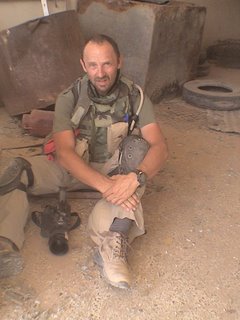
Run Mal Run – The New York Marathon 2005
Ok in one year I have run three marathons and for those of you who have never run the mystical 26.2 miles I apologise because you have not lived life till you have crossed that barrier of personal pain and belief in yourself
And this edition of the Unholyland blog is to salute all of us who in life have achieved what .1 of 1% of the world’s population has done and that is to have run a marathon.
My first marathon was an eye opener it was Athens in the Olympic year (November 2004) and there was “the hill” but to be honest the most exciting thing about running Athens was running up that hill, ok it was a big hill 10 km’s plus but that was the highlight running up a road. The crowd support was equal to that of a local under thirteen soccer game on a wet day in winter. But being your first marathon the sheer joy of completing the event overwhelms you and the sense of accomplishment cannot be understated. You have become the member of an exclusive club in that you are now a marathoner.
My second marathon was Paris in April, which I ran in under four hours. In Marathon circles saying sub 4 means you are in the club. Not totally in the club but you’re a player. And trust me it hurts to break four hours, you do not just jog around for four hours and watch the scenery.
Paris was big in the sense of running with close to thirty thousand other people makes anything big, but being French there always seemed to be that arrogance of other runners cutting you off and well just being French. The best part of running the Paris marathon was the start, running down the Champs Elysees is truly an awe inspiring thing to do, the problem then is that there is still another 25 miles to go. The last couple of miles are in a park and I was so mentally out of it that I do not remember much at all.
It seems silly to say that you are alive and conscious but at a state where you truly do not exist, that is what happens in a marathon. You can take your body and push it beyond the limits. The mystical wall does exist but only in ones mind, it is not rocket science to explain the “wall” in terms of simple glycogen deficit.
New York takes marathon to the next level, in that the complete city gets into this event, everyone you talk to salutes you, and its genuine they all know the course thru the five boroughs, it almost overwhelms you that the biggest city in the world actually enjoys being closed down effectively for twelve hours so that 35,000 people can run through the streets.
It still staggers me that I was actually running in the same race as the world record holder being clapped and cheered by the same crowd. He was running so fast that he probably did not get to hear the crowds clapping for as long as I did.
So there I am running with the World Record Holder in the same race (and yes I did see him, he is fast) how damm cool is that. Two years ago I could not run around the block and now here I am in a race with the World Record Holder. I figured out that in training for the marathon in New York I had run over 1100 kilometres in 190 days, I had woken up at three am on Saturday mornings to run for endless hours before the sun came up, endless loops of the sports academy track with my heart rate monitor going mad. The funny thing is that in 190 days of training it did not rain on me once.
Last Sunday I ran with my heart and soul, it wasn’t about time and personal bests. It was about being able to participate in one of the greatest sporting events in the world. I reflect on the fact that this race was broadcast live around the world and that my girls could actually watch it back home. Unlike Athens this was no wet soccer game in winter.
From the start to the finish I enjoyed every second of this run, 3 hours 59 minutes and 14 seconds. Coming off the bridge and onto 1st Avenue you are hit by a wall of noise that takes your senses apart. There are people ten deep on the footpath screaming and clapping, I had my name on the front of my running singlet and you hear “Go Mal Go” , Gospel Singers in Harlem , Hasidic Jews in Brooklyn and small kids offering you chewing gum in the Bronx. You run down 5th Avenue towards Central Park and through the pain you soak up being part of the biggest marathon in the world.
It hurt and it hurt very badly for the last six miles (ten kilometres), you take your body and break it and then ask it to keep going. Pain will pass when you cross the line but pride will lasts a lifetime. In those last few miles in Central Park you cross a barrier of personal self and as a runner you look up and believe, you believe in yourself.
Thursday, November 17, 2005


Wednesday, October 19, 2005
Images of Pain And Desperation
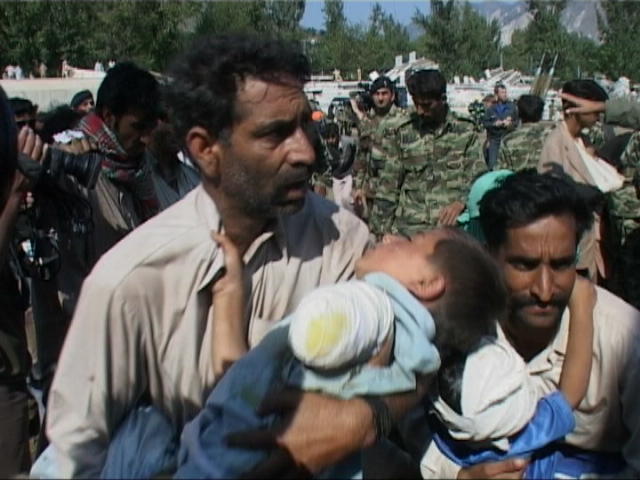


Images of Pain and Desperation
Pakistan Earthquake October 2005
A small hand clinging to a fathers shirt, tilting the camera up you could see that the fathers eyes were clinging to hope, the camera pulls out as the father stands holding the small child clinging to him as he stumbled forwards to the helicopter, the child had only one arm the other stump hung in a bloody bandage, his arm had just been amputated. Mike Tobin wrote these great words to open our package the other night and in one paragraph summed up the tragedy we were both witnessing. Pictures and words that over one million people, would see and hear on the other side of the world in the coming hours.
The earthquake measuring 7.6 on the Richter scale, it lasted six minute’s and killed in excess of 40,000 people more than 65,000 injured and close to 3,500,000 displaced. In the following seven days there has been 575 aftershocks, and Mike never felt one of them and it took a 5.6 in the middle of the night to wake Mark, the team’s Producer.
Numbers mean nothing, when you turn on the camera you can capture a moment a look that sometimes sums up what it must have been like, this assignment has been tough because like the Tsunami there is no enemy, no one to blame, because Mother Nature can be friend and foe in one person.
There was the close up of the little boys face, his eyes black and swollen looking up at the helicopter, the blades casting flickering shadows across his face in time with his heartbeat and suffering. The scene in the helicopter-taking people out injured and maimed 70 of them crammed into the US Army Air Guard Chinook. Every space was full of pain, there was nowhere to sit or kneel for me on the flight back, my feet were wedged between two heads of the injured lying on the floor of the chopper, there black eyes starring up at me then closing.
In the roaring dim of the helicopter, I reached across to Mike and searched thru the backpack we carried between us and found two sports drinks and a couple of granola bars I had packed for emergencies in case we were caught out overnight in the mountains. For some reason my camera had been knocked on and was recording, you could see my arm rummaging and finding the goods then passing them out to the nearest people. They in turned gave them to the most needy, swinging my camera around I zoomed in and caught the woman below my feet having some drink tipped into her mouth. Further down the chopper a man had a spoon and a plastic bottle cut in half with some water in it and he spoon by spoon full was trickling the water into the mouth of whom I assumed was his wife, she was more dead than alive.
You cannot capture the smell of death on camera, and no correspondent has ever found the right words to describe it and neither will I. It is something that pervades the air, covering the Tsunami the air was almost sweet and putrid; here the bodies mangled under concrete for days emitted an odour of fecal decay. When our favourite sports team is about to win, we often say that we can smell victory, the air in the towns and villages of Northern Pakistan smelt of defeat.
At what point as a Photographer covering tragedy do you put down the camera to help the injured, is a question many of us ask ourselves. The answer is somewhat callous and simple. If anyone is to be injured or killed as a result of me not putting down the camera to help them then it is justified to stop filming, but covering events like the aftermath of the Earthquake, there are times when you watch from behind the lens as desperate people struggle to carry the injured and sick on board helicopters. I always stand back out of the way unlike many other photographers who believe that an image is more important than someone else’s child.
I watched as Mike Tobin the correspondent on assignment with me, ran up and down the ramp of the helicopter helping carry the injured, many cynics in this business do this sort of stuff just to put themselves on camera as heroes, but watching Mike that day, he was no hero just another person caught up in this tragedy trying to help.
The best thing I can do as a Photographer is to record the images with as much dignity as I can, to transmit and broadcast these pictures so others may see the plight and realise that here in Pakistan people are hurting and maybe just maybe my images have helped their plight. Professionally there is no greater reward for a Photographer than to have your tape broadcast unedited, just your rushes and FOX did that, for over twenty minutes as we satellited the pictures back to New York the Channel ran them live to air. These are the moments you realise that I did help the victims in my own way.
This is about my twelfth trip to Pakistan for work, from the tumultuous days following 911 to filming exorcisms in desert Temples, sunrises over religious stupas to Friday prayer demonstrations with burning effigies. Trips through the Khyber Pass with armed soldiers for protection to filming child labour exploitation. I have cried as I watched Afghan refugees bury their only baby son, and on this trip seen destruction and scenes that only match the devastation of the Tsunami in South east Asia.
On this trip I have truly marvelled at the spirit of the Pakistani people here to help there fellow countrymen, it is one nation united, the kindness and compassion is everywhere, outside shops University students hand out leaflets listing what you can buy in that store to help the victims, People load cars with supplies that friends get together and drive up into the mountains and hand out food water from the backs of trucks. They are not the UN with their hated brand new Land Cruisers doing yet another fact finding mission, but battered old trucks loaded with goods they pass out to the hands below.
Standing on the backs of these trucks you point the camera down at the hands of small children clawing up in the air hoping that a bottle of water will be passed down. Small hands of five year boys and girls reaching up are powerful and at the same time pitiful images of the despair.
I filmed a small girl maybe no older than four years, who had managed to get a bottle of water sitting in the dirt trying to put it into a tattered plastic bag and thought at the same time this is all this child has in the world, a bottle of water and a plastic bag and yet she had a smile on her face.
As we left Islamabad a storm rolled in and the rain lashed the terminal, lightning and thunder competed like two foes fighting a duel, in the course of a matter of honour. In the mountains around Balakot and hundreds of other villages in the mountains it would be close to freezing, and with no shelter or blankets the death toll will be added to, another small child will be dying as I type this, of exposure. The old will welcome their release from the misery of life as it exists today and greet death as a friend coming to take them away to a better place.
I read my first newspaper in a week, sitting on the plane as we left Pakistan. I often do not read newspapers or watch TV on major assignments. I do not have to compare what I witness to anyone else, it is not a matter of what the competition are doing. I know what we do as a team and nobody competes in human tragedy and misery.
I read an account of a Doctor in Muzaffrabad, (where we filmed the child with one arm clinging) and found myself crying, you can have a cold technical mind whilst working in the field.
You have to, it is the only way to function when surrounded grief and horror. But sitting alone with my thoughts of the images and smells of the last week, I for a short time cried alone in my seat. These are the words that broke me ….
“ fear of death, fear of another earthquake, fear of being buried below the rubble and fear of living “ and I would personally “add fear of being forgotten”.
Mal
Islamabad
Pakistan
October 16 2005
Friday, September 30, 2005
The One from Egypt
The One from Egypt
You think you have been to big cities when you think of New York, London, Paris or even Sydney. But nothing can prepare you for Cairo, try to fathom 25 million people living in one city and compare that to Australia, hell the whole continent has on just over 20 million people living in a very big area to say the least.
But here in Cairo, you can almost count them out on the streets and that is before I even mention the cars and the traffic, more on that later.
The last time I was in Cairo was 1965, 40 years ago as a small boy travelling back to England with the family. From my vague memory bank there was a camel ride to the Pyramids and it was hot, we bought some silly fez hats that lay around for the youthful years, before they were discarded and that is the sum memory of the Land of the Pharaohs circa 1965.
The story we covered here was how the Arab world is reacting to the situation in Iraq and does the Arab world think anything positive has come of the US Invasion and the overthrow of the Saddam Regime. Now before anyone scoffs, there have been some very dramatic movements here in the Middle East/Arab World since Saddam was captured and crawled out of his hole. No modern Arab dictator ever wants to look like that, all of a sudden Libya declares peace and openness, and exposes the Dr Nuclear of Pakistan who was selling Atomic secrets to anyone who would pay. Syria all of a sudden decides it is time to get out of Lebanon after millions take to the streets and Damascus has a spring for the first time in decades. Egypt decides to have a multi party election for President for the first time in the history of the country, and they have a long history. The list goes on across the region.
Sitting back in the Western world, you may consider these events as nothing major. But here democracy is being redefined at an alarming rate that is giving people hope for the first time. Now it is foolish to try and impose our brand and definitions of democracy and think that they will work overnight, but every child’s first steps are small and tentative with lots of stumbles and falls.
Egypt is a police state; to have even dared to question the regime meant time in prison and a beating at the hands of the authorities. The fact that they had elections here a few weeks ago is an incredible opening up, the result was a formality before the first vote was cast, but the fact you have more than one box to tick is something that has never happened before. The result was that Hosni Mubarak was returned with 88% of the vote for a fifth term in office, the other nine parties never had a chance against the machine here. All media is owned and controlled by the Government with no exception, so the day before the vote you can imagine who the newspaper editors suggested deserved your vote.
We did interview the so-called Opposition leader, Ayman Noor; his party received 7% of the vote. The joke is that the authorities have him on trial at the moment for supposedly rigging his own party voting enrolment, and every day newspapers run a picture of him sitting in he is a cell in a courtroom. They have those classic cells with bars in the courtrooms, which you see in movies. He was a pleasant if unexciting character who had no problems of displaying pictures of himself in his office, on one wall there are even duplicates of the same picture framed. Not to mention the same photo also enlarged and framed in the reception area.
But for everyone you meet on location and question, you do meet some very remarkable people who fight for human rights and democracy. Negad El Borai we sat and talked to, on the corniche by the Nile. His only request was that we move down and away from the omni present police, his candid and open opinion about the trickle down effects of the Iraq war amazed us, no one likes what is happening in Baghdad on a day to day basis, but his point was that history is a big picture puzzle and do not lose sight of the positive by dwelling on the negatives.
Life in Cairo is struggle and small corruption if it ever becomes an Olympic sport will see Egyptians take Gold Silver and Bronze. Every aspect of life involves a bribe, and not a subtle bribe but a straight out cash into the hands of the Police. Waiters in restaurants earn almost a hundred dollars more a month than the cop on the beat. As we were checking in to depart at the airport the police on the screening door was quite open in asking for something.
The scary statistic here, is literacy, in a nation of 70 million people 63% cannot read or write, the government likes to quote 36% but as everyone says if the authorities give a figure reverse the numbers and you are closer to the real number. To give it some perspective it is like saying 12.8 million Australians cannot read or write out a population of 20.3 million.
Now 25 million people equates to a lot of cars on the roads of a city that lets face it, is not a model of the super freeway culture. You have never been in traffic till you have been to Cairo, as we were waiting in yet another jam this afternoon, I looked around and duly noted that there were four defined traffic lanes complete with lines that is if you could see the road. However in these four lanes there were 7 lanes of cars, just try to imagine how close they drive next to each other. I will not even mention the second national sport of crossing the road. I did not see one operational set of traffic lights or a single pedestrian crossing in the entire city. The traffic just does it own thing, like a cell culture in a Petri dish it somehow moves multiplies and continues to move. 24 hours a day the constant sound of car horns dominates and permeates all aspects of your senses. With that said you would think it would be the capital of road rage, no not all there seems to exist this sense inevitably so why make life worse. We saw only one minor accident in five days; back in Israel driving to work it is not uncommon to see five car crashes in one hour.
Everyone should visit Cairo at least once in their lifetime, the Pyramids are truly awe inspiring and worthy of all the accolades they receive, the Sphinx is just totally dwarfed by the Pyramids and rather than a lion like figure it looked like a cat sitting proudly on the doorstep. The Cairo Museum houses the most amazing collection of purely ancient stuff for the lack of better words, you walk in and there is literally not a vacant space in the entire building, every nook and cranny has some statue in it. The problem though is that 90% of the artefacts are not marked at all, and those that are marked look like they were typed on a hand typewriter 50 years ago, the paper is so worn and old that the print is barely legible. So for an hour you can immerse yourself in mummies till you are bored, then finally you find the Tutankhamen exhibit halls and you see what an incredible discovery it was to find an intact tomb, these guys took a lot for the afterlife, why you would need three racing chariots is still a question that deserves a better answer.
But then again the traffic could have been bad even back then and you try to get your chariot fixed on a weekend even if you are Pharaoh.
Mal
Cairo
Sept 29 2005
You think you have been to big cities when you think of New York, London, Paris or even Sydney. But nothing can prepare you for Cairo, try to fathom 25 million people living in one city and compare that to Australia, hell the whole continent has on just over 20 million people living in a very big area to say the least.
But here in Cairo, you can almost count them out on the streets and that is before I even mention the cars and the traffic, more on that later.
The last time I was in Cairo was 1965, 40 years ago as a small boy travelling back to England with the family. From my vague memory bank there was a camel ride to the Pyramids and it was hot, we bought some silly fez hats that lay around for the youthful years, before they were discarded and that is the sum memory of the Land of the Pharaohs circa 1965.
The story we covered here was how the Arab world is reacting to the situation in Iraq and does the Arab world think anything positive has come of the US Invasion and the overthrow of the Saddam Regime. Now before anyone scoffs, there have been some very dramatic movements here in the Middle East/Arab World since Saddam was captured and crawled out of his hole. No modern Arab dictator ever wants to look like that, all of a sudden Libya declares peace and openness, and exposes the Dr Nuclear of Pakistan who was selling Atomic secrets to anyone who would pay. Syria all of a sudden decides it is time to get out of Lebanon after millions take to the streets and Damascus has a spring for the first time in decades. Egypt decides to have a multi party election for President for the first time in the history of the country, and they have a long history. The list goes on across the region.
Sitting back in the Western world, you may consider these events as nothing major. But here democracy is being redefined at an alarming rate that is giving people hope for the first time. Now it is foolish to try and impose our brand and definitions of democracy and think that they will work overnight, but every child’s first steps are small and tentative with lots of stumbles and falls.
Egypt is a police state; to have even dared to question the regime meant time in prison and a beating at the hands of the authorities. The fact that they had elections here a few weeks ago is an incredible opening up, the result was a formality before the first vote was cast, but the fact you have more than one box to tick is something that has never happened before. The result was that Hosni Mubarak was returned with 88% of the vote for a fifth term in office, the other nine parties never had a chance against the machine here. All media is owned and controlled by the Government with no exception, so the day before the vote you can imagine who the newspaper editors suggested deserved your vote.
We did interview the so-called Opposition leader, Ayman Noor; his party received 7% of the vote. The joke is that the authorities have him on trial at the moment for supposedly rigging his own party voting enrolment, and every day newspapers run a picture of him sitting in he is a cell in a courtroom. They have those classic cells with bars in the courtrooms, which you see in movies. He was a pleasant if unexciting character who had no problems of displaying pictures of himself in his office, on one wall there are even duplicates of the same picture framed. Not to mention the same photo also enlarged and framed in the reception area.
But for everyone you meet on location and question, you do meet some very remarkable people who fight for human rights and democracy. Negad El Borai we sat and talked to, on the corniche by the Nile. His only request was that we move down and away from the omni present police, his candid and open opinion about the trickle down effects of the Iraq war amazed us, no one likes what is happening in Baghdad on a day to day basis, but his point was that history is a big picture puzzle and do not lose sight of the positive by dwelling on the negatives.
Life in Cairo is struggle and small corruption if it ever becomes an Olympic sport will see Egyptians take Gold Silver and Bronze. Every aspect of life involves a bribe, and not a subtle bribe but a straight out cash into the hands of the Police. Waiters in restaurants earn almost a hundred dollars more a month than the cop on the beat. As we were checking in to depart at the airport the police on the screening door was quite open in asking for something.
The scary statistic here, is literacy, in a nation of 70 million people 63% cannot read or write, the government likes to quote 36% but as everyone says if the authorities give a figure reverse the numbers and you are closer to the real number. To give it some perspective it is like saying 12.8 million Australians cannot read or write out a population of 20.3 million.
Now 25 million people equates to a lot of cars on the roads of a city that lets face it, is not a model of the super freeway culture. You have never been in traffic till you have been to Cairo, as we were waiting in yet another jam this afternoon, I looked around and duly noted that there were four defined traffic lanes complete with lines that is if you could see the road. However in these four lanes there were 7 lanes of cars, just try to imagine how close they drive next to each other. I will not even mention the second national sport of crossing the road. I did not see one operational set of traffic lights or a single pedestrian crossing in the entire city. The traffic just does it own thing, like a cell culture in a Petri dish it somehow moves multiplies and continues to move. 24 hours a day the constant sound of car horns dominates and permeates all aspects of your senses. With that said you would think it would be the capital of road rage, no not all there seems to exist this sense inevitably so why make life worse. We saw only one minor accident in five days; back in Israel driving to work it is not uncommon to see five car crashes in one hour.
Everyone should visit Cairo at least once in their lifetime, the Pyramids are truly awe inspiring and worthy of all the accolades they receive, the Sphinx is just totally dwarfed by the Pyramids and rather than a lion like figure it looked like a cat sitting proudly on the doorstep. The Cairo Museum houses the most amazing collection of purely ancient stuff for the lack of better words, you walk in and there is literally not a vacant space in the entire building, every nook and cranny has some statue in it. The problem though is that 90% of the artefacts are not marked at all, and those that are marked look like they were typed on a hand typewriter 50 years ago, the paper is so worn and old that the print is barely legible. So for an hour you can immerse yourself in mummies till you are bored, then finally you find the Tutankhamen exhibit halls and you see what an incredible discovery it was to find an intact tomb, these guys took a lot for the afterlife, why you would need three racing chariots is still a question that deserves a better answer.
But then again the traffic could have been bad even back then and you try to get your chariot fixed on a weekend even if you are Pharaoh.
Mal
Cairo
Sept 29 2005
Sunday, August 28, 2005
Journey into the Heartland - Pakistan 2000
Found an old diary piece I wrote after a trip to Pakistan a few years back - enjoy if you want to read through it
Cheers
Mal
Israel August 2005
-------------------------------------------------
Sunday September 24 2000
Hong Kong – Bangkok – Karachi
There is a saying that every journey starts with a step, for life on the road every journey starts at the excess baggage counter. When I talk excess baggage I mean excess baggage, once when travelling by myself I had 300 kilos excess baggage spread over three trolleys behind me, needless to say I paid for the fuel for that flight.
Correspondent Joe Kainz and I had decided that this twelve-day trip would be best done with a minimal amount of equipment as we are due to travel extensively over our time in Pakistan. From the south to the North of the birthplace of the Indus civilization.
Karachi the first destination nine hours later,
Customs come and go, but the machinations of customs at airports is something to behold and the power of the Customs officials pen is mightier than the sword, even in a country under military rule. Logic defies reality and what applied the last time you arrived with a mound of television equipment did not apply this time.
The first sense of arrival is the assault of the senses of another country, the noise of an airport at 9.00pm, the heat and the hustle of porters. The drive in from the airport is often the first time you can sit back and relax, the baggage has arrived intact the hotel awaits and you try to remember the differences from the last time. Perhaps what amazed me most was that for the first time in visiting Pakistan over the last three years was that I started seeing signs which had web addresses on them, but I must admit that they seem to have decided that the longer the domain name the better the site must be 23 letters before the dot com.
From billboards advertising the infernal golden arches to the decorated bus running the red light whilst taxi drivers laughed and the motorbike with a family of six abreast. Pakistan may be chasing the e world but life has not visibly changed in nine months.
Monday 25th September 2000
Karachi – Islamabad
Six hours later the roads are deserted and taxi drivers around Asia are convinced that the faster they drive the happier you will be, so on a greasy road with no traffic we set out for the airport and the domestic flight north 2 hours to Islamabad.
There is a saying in diplomatic and business circle here that Islamabad is not in Pakistan, but in fact Pakistan is 30 km’s from Islamabad. It is a city that is less than forty years old and was planned to serve the interests of locals and diplomats with no sense of direction.
The only sense of life in the drive from the Airport is the increase in police checkpoints, as a result of a market place bombing a week ago. The impression driving past these checkpoints is that they serve only to shake down local bus and taxi drivers.
The first story we are working on up here is the decline in Pakistan cultural heritage, which like the fate of so many other countries is seeing its archeological artifacts being smuggled and sold overseas. Our first interview was with Pakistan’s’ leading archeologist who has been studying the ancient history of this land for nearly half a century.
We were due to interview another person who is a leading expert in this field, but who is currently working for a Government department, but she told us that it was pointless to talk to her as she has to toe the official line and would have to lie, but was still willing to appear on camera if we wanted. We declined.
Mobile phones are essential tool in everyday living but buying a local chip to use is not the easiest thing to achieve in a minimal timeframe. A simple rule on the road, is that the more logical an idea the less likely it is going to work. After 20 minutes in the largest phone companies office, moving from office to office, floor to floor and selecting a suitable plan we were told that our phone is not compatible and we should go to the other company next door. 10 minutes later we had an operational phone.
You get to spend endless minutes aimlessly wandering around hotel shopping centres, knowing full well that they are overpriced, but the books tucked away behind the handicrafts can often reveal the most bizarre reading material – take tonight’s offering in the Holiday Inn Islamabad “ Treatise of Flexible Pavement Design “ a complete diatribe on how to build a multi lane highway. Very useful on the road, might have to build a road one-day.
Tuesday 26th September 2000
Every knows that the best light to film in is in the magic hour after sunrise and before sunset, the trouble is getting other members of the team to agree to get up in the dark and start work at 5am. This is the day after also getting up at 5am the previous day to catch a flight up here. Well Joe agreed and the day began with me asking the driver to slow down in a polite but firm tone.
Driving in Pakistan is regarded as a bloodsport with no rhyme or reason, why bother with a map when you can take 5 wrong terms, go in the wrong direction and ask endless people which direction. Today was no exception. We would be dropped off at one spot due to the road being so bad, (next time I will buy the copy of “Treatise of Flexible Pavement Design”) then we would find the driver where we originally wanted to go but could not because of the road.
You meet great unassuming people on the road who are brilliant in their fields of expertise and then you meet people who have not got to their position of influence by apparently valid means, today’s example was a person who insisted on sitting behind his desk with a room full of sycophantic underlings nodding to his every word. The after asking us to leave whilst he made a phone call for the whole building to hear with the door open, and then rings a bell to call another person to come running to summon us. Please give me a break from such fools.
It was a good days filming today, we had brilliant dawn light and the crossroads of civilization where Alexander the Great visited (well conquered) in 327BC is know recorded for posterity. Visiting a looted site makes you realize that the problem here is corruption at all levels and the looting will continue until there is nothing left unless corruption is tackled in Pakistan.
Wednesday 27th Sept 2000
Islamabad – Karachi
A travel morning down to Karachi and a rise in temperature of about 10, in fact a boring day on the road with a couple of feature interviews and a late night interview with a psychiatrist. We have started working on the second story about the state of women’s mental health in Pakistan and the treatment they receive which involves trance dancing and chains in temples. That is tomorrow night so I am looking forward to some good pictures and something different to say the least.
The afternoon saw us wrap the last interview up with the Director General of the Department of Archaeology, the office was ancient to say the least. It is not until you stop and look around, did I realize that there were no computers on any desk. All communication was done in longhand and involved people walking in and out of offices. The Director had an email address but I could not figure out where the computer lived.
A hour off to try and get some shopping for clothes before heading to Thatta tomorrow was thwarted by the fact that every shop was closed in Karachi, except for shoe stores. Why no one knew they were closed because – well because.
Two Days later Friday 29th September 2000 6.30pm
Post Thatta and the Shrine Therapy Story.
Thatta is about two hours South East of Karachi, then turn off the main road and head south for another hour into the heartland of the Sind Basin, cross the Indus River and keep going. Eventually you come to the town of Chuhar Jamali, the closest village to the Sufi Shrines. Electricity is spasmodic and you realise that the whole world has not grasped the e world, when there was not even a fax machine in this town let alone a computer anywhere.
Sufi shrines are best described as tombs of mystic or holy men, like many shrines in the western world these attract pilgrims and devotees who believe that the power of devotion and worship can help them. The main concern for Pakistani health officials is that due to poverty and illiteracy is that some people have come to rely on these shrines as their primary source of medical help, forgoing modern medicine due to the cost.
The shrines of Ali jabar and ali 2 attract around 30,000 devotees a month, situated in the middle of fields 6 km from the village of Chuhar Jamali, people are living for years in mud and stick shanties in the most brutal and harsh landscape. The temperature in summer rarely drops below 40; there is no shade apart from the temple and mud huts, which become furnaces and ovens.
The dirt and filth defies words, and sanitary conditions belong to another century. Families endure these conditions in the hope of a miracle and they can afford the cost of hope.
We arrived as the sun was dropping and the sound of drums heralded our first exposure to what was to become probably the most bizarre night of filming in my career spanning more than two decades.
On the steps of the shrine three drummers pounded out a rhythm and in the forecourt of dirt and rubbish four devotees were literally shaking themselves to trance frenzy, rolling and running up the stairs to the shrine to throw themselves down in an uncontrollable tangle of limbs. The eyes were not focused and the drums kept going for over an hour.
The first person came forward with his miracle cure story that involved the Sufi replacing all his internal organs, over the next sixteen hours we were presented with stories of cancer and hepatitis being treated by the power of the Sufi.
Perhaps the saddest aspect of this shrine therapy is that a large percentage of the devotees are women with obvious mental health problems from paranoid schizophrenia depression. They pace the shrine with clocklike timing, running and slamming into walls on occasions; standing and spinning the head with hair flying or speaking in tongues while shaking uncontrollably.
Another woman in her mid twenties sat chained to the bars of the shrine window so that she would not run away and hurt herself of others. Her husband sat holding her hand; it was a heartbreaking scene to see this tragedy unfold in front of the camera lens.
Inside the temple and around the outside women arched backwards and slammed into the marble floor with howls of demonic possession and pleas for help from the Sufi, whilst family members tried to minimize their injuries.
Dawn broke and the early mist light revealed a scene of controlled peace, only the occasional voice pleaded in the echoes of marble. Families that were leaving collected their possessions often a straw mat and tin cooking pot, whilst others rubbed mud from pools of wastewater and dirt onto the heads of infants seeking a miracle.
As we drove away, I thought how lucky some of us are in this world and the plight of others were the greatest possession they have in life is hope and no one can take that away from anyone.
Karachi was a welcome site and entering the city graffiti on a wall proclaimed “Crush India” welcome back to Pakistan 2000.
Saturday 30th September 2000
Karachi
Time to move onto the new stories, Junoon the band has received so many international accolades over the past decade and have laid claim to the title to the biggest band in Asia.
The problem of piracy of music and CDs is beyond words on in South Asia and a factory we visited produces 12 million CDs a year it produce more but it has not got enough machines, full capacity twenty four hours a day seven days a week.
Today was also one of those great days of fixers getting things wrong, to the point of Fawlty Towers proportion. We asked how many people were expected at the concert, whether the venue was indoors or outside and what time was Junoon due on stage.
Emphatically after checking and much discussion amongst the fixers and driver it was agreed that
1. The Concert was indoors
2. The anticipated crowd was 800 maybe 900
3. The group Junoon will start at 9pm , yes 9pm
That was the end of discussion, “Let me tell you” is a Pakistani way of saying listen I know what I am talking about. What would you know you do not live here, ha ha ha I am the expert.
After arriving at the massive Pakistan Air force Museum grounds set in a sprawling park of 10 acres place with a stage being prepared in the middle of the park to be told that at least 8,000 tickets had been presold and hopefully Junoon would on stage around midnight. Joe and I laughed not at the situation but at the fact that the fixers seemed pleased that everything was as they had arranged.
We finished filming at 3.45 am the next morning in a dark Karachi street with a dead cat in the middle of the road.
Sunday 1st October 2000
Karachi
The low point of the day was a get together of politicians and newspaper editors in the evening. It is no wonder that Pakistan faces the 21st century in such dire straits, as a nation it behind Bangladesh in almost all aspects now. These somewhat august gentlemen seem to consider yelling as a form of conversation and even the listening was beyond their level of manners. I left the evening assured that the military has a role in the future of Pakistan; at least they can provide order amongst the ruins of democratic chaos. The newspaper editor’s voice the future, but it sounded very much the past.
Politicians in Pakistan believe that to serve the people, they must have been to prison to suffer the indignity of the masses. These same people drink and eat whilst outside their drivers wait hungry, they are given the leftovers from the dinner party whilst the after dinner drinks are passed around. These same drivers all want the military to remain in power when asked off the record.
Monday 2nd October 2000
Karachi – Lahore
It was meant to be an easy operation, as promised by a Chief Minister “ have whatever you want, take it you have my permission”. It was a simple matter of dubbing some video from the archives of the Local Archive for Culture office of Sufi Music, enter the well yes but no world of Pakistan. To make matters worse one of our local fixers managed to totally confuse everyone by arranging something we did not ask for and compound the problem by having all discussions in Urdu and leaving us to sort out a mess we did not want to be in. It ended with Joe signing a bit of paper on behalf of the network saying we would not use any material, which has the same legal binding as me signing on behalf of Microsoft because I am running Windows 98.
An evening flight to Lahore and the final story – Imran Khan Profile and Feature Interview.
Tuesday 3rd October 2000
Lahore – Karachi
Lahore has the richest colonial history and buildings, the trouble is seeing it through the pollution. If the famed Red Fort has an enemy it is not the ravages of the elements but the exhaust fumes that by sunset reduce visibility to a couple of hundred meters.
The final story is Imran Khan, the famed Pakistani Cricket captain and living legend that eight years ago gave Pakistan the cricket world cup. Following the death of his mother from cancer he has devoted himself to building a hospital for cancer sufferers in Pakistan, providing free treatment to all that cannot afford it.
Stepping into the hospital was like stepping from the third world to the first world; this hospital could be in any major city in the world. The faces of the children in the wards upon seeing Imran was of bewilderment being to young to know who he is, but the faces of the mothers and fathers with their sick children when they talked to Imran revealed a glimpse into why there is hope here when every other section of society is collapsing due to corruption and mismanagement.
Pakistan Airlines flight to Islamabad tonight was delayed 4 hours because, well we never found out. So to avoid any problems the solution was to announce that it was a free seating flight. Meaning sit wherever you like, first come first serve. Enjoy your flight Inshallah.
Wednesday 4th October 2000
Islamabad – Attock – Middle of Nowhere – Islamabad
Is it the messenger or is it the message, comes to mind following Imran Khan on the campaign trail in the rural areas of Pakistan. The crowds come to see and meet him, but are they receptive to his vision for Pakistan. The team around him gave me great hope as men who have a vision without corruption but could it work here is the question.
Imran at times is the great sportsman, but a reluctant politician on the stump, he seemed to find it hard to just go and talk to people and shake hands like politicians in the west, but then again this is not the west. We visited three villages during the day, at the last in a fresh plowed field as the sunset Imran gave a passionate speech and left the stage to be mobbed by the crowd just wanting to shake hands with a living legend in a country where there are few.
Thursday 5th October 2000
Islamabad – Karachi – Kuala Lumper – Hong Kong (Next Day)
With the trip nearly over, we have only the final interview to complete. The final sit down feature interview with Imran at home. We sat down for nearly and hour and quizzed Imran on why he should lead this nation and life under Imrans vision.
The trip was over and effectively we just pack and travel home. Sitting in the departure lounge in Karachi I figured that in the past twelve days we had spent nearly eighteen hours in airport lounges waiting for various Pakistani flights, checked in and out 14 times from hotels. We had shot nearly 19 hours of videotape to be edited down to 5 feature stories.
The final laugh was at the airport leaving Karachi. Remembering back to the first day and the request that we send an equipment list in advance to assist Customs, I asked the Customs officer for a fax or email address, only to be told that sorry we do not have an email and nor do we have a fax machine. The largest airport in the country and they do not even have a fax machine. When pressed for how we relay the required information, we were told to send a letter addressed to Customs, Karachi Airport, and Pakistan.
Imrans vision has a long way to go, but as we saw at the shrine – hope shines eternal in Pakistan.
Malcolm James
Cameraman/Producer
September/October 2000
Cheers
Mal
Israel August 2005
-------------------------------------------------
Sunday September 24 2000
Hong Kong – Bangkok – Karachi
There is a saying that every journey starts with a step, for life on the road every journey starts at the excess baggage counter. When I talk excess baggage I mean excess baggage, once when travelling by myself I had 300 kilos excess baggage spread over three trolleys behind me, needless to say I paid for the fuel for that flight.
Correspondent Joe Kainz and I had decided that this twelve-day trip would be best done with a minimal amount of equipment as we are due to travel extensively over our time in Pakistan. From the south to the North of the birthplace of the Indus civilization.
Karachi the first destination nine hours later,
Customs come and go, but the machinations of customs at airports is something to behold and the power of the Customs officials pen is mightier than the sword, even in a country under military rule. Logic defies reality and what applied the last time you arrived with a mound of television equipment did not apply this time.
The first sense of arrival is the assault of the senses of another country, the noise of an airport at 9.00pm, the heat and the hustle of porters. The drive in from the airport is often the first time you can sit back and relax, the baggage has arrived intact the hotel awaits and you try to remember the differences from the last time. Perhaps what amazed me most was that for the first time in visiting Pakistan over the last three years was that I started seeing signs which had web addresses on them, but I must admit that they seem to have decided that the longer the domain name the better the site must be 23 letters before the dot com.
From billboards advertising the infernal golden arches to the decorated bus running the red light whilst taxi drivers laughed and the motorbike with a family of six abreast. Pakistan may be chasing the e world but life has not visibly changed in nine months.
Monday 25th September 2000
Karachi – Islamabad
Six hours later the roads are deserted and taxi drivers around Asia are convinced that the faster they drive the happier you will be, so on a greasy road with no traffic we set out for the airport and the domestic flight north 2 hours to Islamabad.
There is a saying in diplomatic and business circle here that Islamabad is not in Pakistan, but in fact Pakistan is 30 km’s from Islamabad. It is a city that is less than forty years old and was planned to serve the interests of locals and diplomats with no sense of direction.
The only sense of life in the drive from the Airport is the increase in police checkpoints, as a result of a market place bombing a week ago. The impression driving past these checkpoints is that they serve only to shake down local bus and taxi drivers.
The first story we are working on up here is the decline in Pakistan cultural heritage, which like the fate of so many other countries is seeing its archeological artifacts being smuggled and sold overseas. Our first interview was with Pakistan’s’ leading archeologist who has been studying the ancient history of this land for nearly half a century.
We were due to interview another person who is a leading expert in this field, but who is currently working for a Government department, but she told us that it was pointless to talk to her as she has to toe the official line and would have to lie, but was still willing to appear on camera if we wanted. We declined.
Mobile phones are essential tool in everyday living but buying a local chip to use is not the easiest thing to achieve in a minimal timeframe. A simple rule on the road, is that the more logical an idea the less likely it is going to work. After 20 minutes in the largest phone companies office, moving from office to office, floor to floor and selecting a suitable plan we were told that our phone is not compatible and we should go to the other company next door. 10 minutes later we had an operational phone.
You get to spend endless minutes aimlessly wandering around hotel shopping centres, knowing full well that they are overpriced, but the books tucked away behind the handicrafts can often reveal the most bizarre reading material – take tonight’s offering in the Holiday Inn Islamabad “ Treatise of Flexible Pavement Design “ a complete diatribe on how to build a multi lane highway. Very useful on the road, might have to build a road one-day.
Tuesday 26th September 2000
Every knows that the best light to film in is in the magic hour after sunrise and before sunset, the trouble is getting other members of the team to agree to get up in the dark and start work at 5am. This is the day after also getting up at 5am the previous day to catch a flight up here. Well Joe agreed and the day began with me asking the driver to slow down in a polite but firm tone.
Driving in Pakistan is regarded as a bloodsport with no rhyme or reason, why bother with a map when you can take 5 wrong terms, go in the wrong direction and ask endless people which direction. Today was no exception. We would be dropped off at one spot due to the road being so bad, (next time I will buy the copy of “Treatise of Flexible Pavement Design”) then we would find the driver where we originally wanted to go but could not because of the road.
You meet great unassuming people on the road who are brilliant in their fields of expertise and then you meet people who have not got to their position of influence by apparently valid means, today’s example was a person who insisted on sitting behind his desk with a room full of sycophantic underlings nodding to his every word. The after asking us to leave whilst he made a phone call for the whole building to hear with the door open, and then rings a bell to call another person to come running to summon us. Please give me a break from such fools.
It was a good days filming today, we had brilliant dawn light and the crossroads of civilization where Alexander the Great visited (well conquered) in 327BC is know recorded for posterity. Visiting a looted site makes you realize that the problem here is corruption at all levels and the looting will continue until there is nothing left unless corruption is tackled in Pakistan.
Wednesday 27th Sept 2000
Islamabad – Karachi
A travel morning down to Karachi and a rise in temperature of about 10, in fact a boring day on the road with a couple of feature interviews and a late night interview with a psychiatrist. We have started working on the second story about the state of women’s mental health in Pakistan and the treatment they receive which involves trance dancing and chains in temples. That is tomorrow night so I am looking forward to some good pictures and something different to say the least.
The afternoon saw us wrap the last interview up with the Director General of the Department of Archaeology, the office was ancient to say the least. It is not until you stop and look around, did I realize that there were no computers on any desk. All communication was done in longhand and involved people walking in and out of offices. The Director had an email address but I could not figure out where the computer lived.
A hour off to try and get some shopping for clothes before heading to Thatta tomorrow was thwarted by the fact that every shop was closed in Karachi, except for shoe stores. Why no one knew they were closed because – well because.
Two Days later Friday 29th September 2000 6.30pm
Post Thatta and the Shrine Therapy Story.
Thatta is about two hours South East of Karachi, then turn off the main road and head south for another hour into the heartland of the Sind Basin, cross the Indus River and keep going. Eventually you come to the town of Chuhar Jamali, the closest village to the Sufi Shrines. Electricity is spasmodic and you realise that the whole world has not grasped the e world, when there was not even a fax machine in this town let alone a computer anywhere.
Sufi shrines are best described as tombs of mystic or holy men, like many shrines in the western world these attract pilgrims and devotees who believe that the power of devotion and worship can help them. The main concern for Pakistani health officials is that due to poverty and illiteracy is that some people have come to rely on these shrines as their primary source of medical help, forgoing modern medicine due to the cost.
The shrines of Ali jabar and ali 2 attract around 30,000 devotees a month, situated in the middle of fields 6 km from the village of Chuhar Jamali, people are living for years in mud and stick shanties in the most brutal and harsh landscape. The temperature in summer rarely drops below 40; there is no shade apart from the temple and mud huts, which become furnaces and ovens.
The dirt and filth defies words, and sanitary conditions belong to another century. Families endure these conditions in the hope of a miracle and they can afford the cost of hope.
We arrived as the sun was dropping and the sound of drums heralded our first exposure to what was to become probably the most bizarre night of filming in my career spanning more than two decades.
On the steps of the shrine three drummers pounded out a rhythm and in the forecourt of dirt and rubbish four devotees were literally shaking themselves to trance frenzy, rolling and running up the stairs to the shrine to throw themselves down in an uncontrollable tangle of limbs. The eyes were not focused and the drums kept going for over an hour.
The first person came forward with his miracle cure story that involved the Sufi replacing all his internal organs, over the next sixteen hours we were presented with stories of cancer and hepatitis being treated by the power of the Sufi.
Perhaps the saddest aspect of this shrine therapy is that a large percentage of the devotees are women with obvious mental health problems from paranoid schizophrenia depression. They pace the shrine with clocklike timing, running and slamming into walls on occasions; standing and spinning the head with hair flying or speaking in tongues while shaking uncontrollably.
Another woman in her mid twenties sat chained to the bars of the shrine window so that she would not run away and hurt herself of others. Her husband sat holding her hand; it was a heartbreaking scene to see this tragedy unfold in front of the camera lens.
Inside the temple and around the outside women arched backwards and slammed into the marble floor with howls of demonic possession and pleas for help from the Sufi, whilst family members tried to minimize their injuries.
Dawn broke and the early mist light revealed a scene of controlled peace, only the occasional voice pleaded in the echoes of marble. Families that were leaving collected their possessions often a straw mat and tin cooking pot, whilst others rubbed mud from pools of wastewater and dirt onto the heads of infants seeking a miracle.
As we drove away, I thought how lucky some of us are in this world and the plight of others were the greatest possession they have in life is hope and no one can take that away from anyone.
Karachi was a welcome site and entering the city graffiti on a wall proclaimed “Crush India” welcome back to Pakistan 2000.
Saturday 30th September 2000
Karachi
Time to move onto the new stories, Junoon the band has received so many international accolades over the past decade and have laid claim to the title to the biggest band in Asia.
The problem of piracy of music and CDs is beyond words on in South Asia and a factory we visited produces 12 million CDs a year it produce more but it has not got enough machines, full capacity twenty four hours a day seven days a week.
Today was also one of those great days of fixers getting things wrong, to the point of Fawlty Towers proportion. We asked how many people were expected at the concert, whether the venue was indoors or outside and what time was Junoon due on stage.
Emphatically after checking and much discussion amongst the fixers and driver it was agreed that
1. The Concert was indoors
2. The anticipated crowd was 800 maybe 900
3. The group Junoon will start at 9pm , yes 9pm
That was the end of discussion, “Let me tell you” is a Pakistani way of saying listen I know what I am talking about. What would you know you do not live here, ha ha ha I am the expert.
After arriving at the massive Pakistan Air force Museum grounds set in a sprawling park of 10 acres place with a stage being prepared in the middle of the park to be told that at least 8,000 tickets had been presold and hopefully Junoon would on stage around midnight. Joe and I laughed not at the situation but at the fact that the fixers seemed pleased that everything was as they had arranged.
We finished filming at 3.45 am the next morning in a dark Karachi street with a dead cat in the middle of the road.
Sunday 1st October 2000
Karachi
The low point of the day was a get together of politicians and newspaper editors in the evening. It is no wonder that Pakistan faces the 21st century in such dire straits, as a nation it behind Bangladesh in almost all aspects now. These somewhat august gentlemen seem to consider yelling as a form of conversation and even the listening was beyond their level of manners. I left the evening assured that the military has a role in the future of Pakistan; at least they can provide order amongst the ruins of democratic chaos. The newspaper editor’s voice the future, but it sounded very much the past.
Politicians in Pakistan believe that to serve the people, they must have been to prison to suffer the indignity of the masses. These same people drink and eat whilst outside their drivers wait hungry, they are given the leftovers from the dinner party whilst the after dinner drinks are passed around. These same drivers all want the military to remain in power when asked off the record.
Monday 2nd October 2000
Karachi – Lahore
It was meant to be an easy operation, as promised by a Chief Minister “ have whatever you want, take it you have my permission”. It was a simple matter of dubbing some video from the archives of the Local Archive for Culture office of Sufi Music, enter the well yes but no world of Pakistan. To make matters worse one of our local fixers managed to totally confuse everyone by arranging something we did not ask for and compound the problem by having all discussions in Urdu and leaving us to sort out a mess we did not want to be in. It ended with Joe signing a bit of paper on behalf of the network saying we would not use any material, which has the same legal binding as me signing on behalf of Microsoft because I am running Windows 98.
An evening flight to Lahore and the final story – Imran Khan Profile and Feature Interview.
Tuesday 3rd October 2000
Lahore – Karachi
Lahore has the richest colonial history and buildings, the trouble is seeing it through the pollution. If the famed Red Fort has an enemy it is not the ravages of the elements but the exhaust fumes that by sunset reduce visibility to a couple of hundred meters.
The final story is Imran Khan, the famed Pakistani Cricket captain and living legend that eight years ago gave Pakistan the cricket world cup. Following the death of his mother from cancer he has devoted himself to building a hospital for cancer sufferers in Pakistan, providing free treatment to all that cannot afford it.
Stepping into the hospital was like stepping from the third world to the first world; this hospital could be in any major city in the world. The faces of the children in the wards upon seeing Imran was of bewilderment being to young to know who he is, but the faces of the mothers and fathers with their sick children when they talked to Imran revealed a glimpse into why there is hope here when every other section of society is collapsing due to corruption and mismanagement.
Pakistan Airlines flight to Islamabad tonight was delayed 4 hours because, well we never found out. So to avoid any problems the solution was to announce that it was a free seating flight. Meaning sit wherever you like, first come first serve. Enjoy your flight Inshallah.
Wednesday 4th October 2000
Islamabad – Attock – Middle of Nowhere – Islamabad
Is it the messenger or is it the message, comes to mind following Imran Khan on the campaign trail in the rural areas of Pakistan. The crowds come to see and meet him, but are they receptive to his vision for Pakistan. The team around him gave me great hope as men who have a vision without corruption but could it work here is the question.
Imran at times is the great sportsman, but a reluctant politician on the stump, he seemed to find it hard to just go and talk to people and shake hands like politicians in the west, but then again this is not the west. We visited three villages during the day, at the last in a fresh plowed field as the sunset Imran gave a passionate speech and left the stage to be mobbed by the crowd just wanting to shake hands with a living legend in a country where there are few.
Thursday 5th October 2000
Islamabad – Karachi – Kuala Lumper – Hong Kong (Next Day)
With the trip nearly over, we have only the final interview to complete. The final sit down feature interview with Imran at home. We sat down for nearly and hour and quizzed Imran on why he should lead this nation and life under Imrans vision.
The trip was over and effectively we just pack and travel home. Sitting in the departure lounge in Karachi I figured that in the past twelve days we had spent nearly eighteen hours in airport lounges waiting for various Pakistani flights, checked in and out 14 times from hotels. We had shot nearly 19 hours of videotape to be edited down to 5 feature stories.
The final laugh was at the airport leaving Karachi. Remembering back to the first day and the request that we send an equipment list in advance to assist Customs, I asked the Customs officer for a fax or email address, only to be told that sorry we do not have an email and nor do we have a fax machine. The largest airport in the country and they do not even have a fax machine. When pressed for how we relay the required information, we were told to send a letter addressed to Customs, Karachi Airport, and Pakistan.
Imrans vision has a long way to go, but as we saw at the shrine – hope shines eternal in Pakistan.
Malcolm James
Cameraman/Producer
September/October 2000
West Bank End Game
For months there had been words of doom regarding the dis-engagement from Gaza and four settlements in the West Bank. That there would be blood on the streets as Jew expelled Jew, the opposition had promised hundred's of thousands protestors blocakading the army and police.
In true Israeli fashion, nobody's predictions came true, more people were injured in road accidents during the six days it took to remove the settlements than were injured in the actual operation of removing the settlers.
After the first phase in which the Gaza settlements were cleared, this week was the turn of the isolated settlements in the north of the West Bank. Deep inside Palestinian lands the four settlements to be evacuated had been fortified to repel the Army and Police.
Against one of the most disciplined and modern war forces in the world, the religious zealots and infilltrators thought that they would stock pile flour bombs and tomatoes complete with bottles of oil to pour down from the roofs.
We arrived in the settlement of Hormesh twenty four hours before the army and police, and drove into what can best be described as a quasi modern suburb with neat homes, paved streets, young parents pushing babies in strollers.
Given the ettiquette and rules of boys and girls not mixing, arranged marriages within the strict religious Jews, results in early marriage so it is not unusual to see young teen girls with at least one young child, I was talking to a young woman and found out that she was 24 and expecting her fifth child in the coming months.
So as we set up our live position on the edge of a playground overlooking the Synagogue and Yeshiva (Jewish Religious School same as an Islamic Madrassah), the speakers blare out that if anyone needs anymore magazines or ammunition to come down to the Yeshiva and collect them.
After being in the pleasant community of Hormesh for only a few hours, we had had five tyres slashed on our vehicles and rather than repair them, we decided to wait till things were over before repairing them. It turned out that the kid that had put the 18 holes in our tyres was ten years old and was arrested on the roof of the Yeshiva. A small pathetic child that had been brainwashed by religion and left on his own, I had no sympathy for this little kid as he represented what is wrong in this country and not the future.
There were about 1500 people in Hormesh, of those 1400 were infiltrators NOT settlers, they came to cause trouble. They had foolishly believed the right wing and religious leaders who had promised them tens of thousands more to boost there numbers and naturally divine intervention was immenent.
At seven am the next morning the police and army arrived, ten hours later with no injuries the operation was over. Clinical in its implementation, it was like watching a swiss watch movement.
Protestors had set up burning tyres barricades and torched the occasional car, this at the best delayed things by five minutes as the troops would simply relax find some shade (make some phone calls home on their cell phones) wait for the tyres to burn out, a D9 bulldozer would then push the tyres to the side and the evictions continued. Some came peacfully some came kicking and screaming but they all came rounded up and put on a bus out.
As we drove out (after repairs to the vehicles) the settlement of Hormesh was empty and will be bulldozed in the coming days. Driving out in the military convoy of buses and army vehicles we passed through a large Palestinian village, where people leaned on the balconies and watched in silence. No guns blasting the sky or dancing in the streets, but in their eyes you could see their glea.
Just fyi there are another 120 plus illegal Israeli settlements remaing in the West Bank
In true Israeli fashion, nobody's predictions came true, more people were injured in road accidents during the six days it took to remove the settlements than were injured in the actual operation of removing the settlers.
After the first phase in which the Gaza settlements were cleared, this week was the turn of the isolated settlements in the north of the West Bank. Deep inside Palestinian lands the four settlements to be evacuated had been fortified to repel the Army and Police.
Against one of the most disciplined and modern war forces in the world, the religious zealots and infilltrators thought that they would stock pile flour bombs and tomatoes complete with bottles of oil to pour down from the roofs.
We arrived in the settlement of Hormesh twenty four hours before the army and police, and drove into what can best be described as a quasi modern suburb with neat homes, paved streets, young parents pushing babies in strollers.
Given the ettiquette and rules of boys and girls not mixing, arranged marriages within the strict religious Jews, results in early marriage so it is not unusual to see young teen girls with at least one young child, I was talking to a young woman and found out that she was 24 and expecting her fifth child in the coming months.
So as we set up our live position on the edge of a playground overlooking the Synagogue and Yeshiva (Jewish Religious School same as an Islamic Madrassah), the speakers blare out that if anyone needs anymore magazines or ammunition to come down to the Yeshiva and collect them.
After being in the pleasant community of Hormesh for only a few hours, we had had five tyres slashed on our vehicles and rather than repair them, we decided to wait till things were over before repairing them. It turned out that the kid that had put the 18 holes in our tyres was ten years old and was arrested on the roof of the Yeshiva. A small pathetic child that had been brainwashed by religion and left on his own, I had no sympathy for this little kid as he represented what is wrong in this country and not the future.
There were about 1500 people in Hormesh, of those 1400 were infiltrators NOT settlers, they came to cause trouble. They had foolishly believed the right wing and religious leaders who had promised them tens of thousands more to boost there numbers and naturally divine intervention was immenent.
At seven am the next morning the police and army arrived, ten hours later with no injuries the operation was over. Clinical in its implementation, it was like watching a swiss watch movement.
Protestors had set up burning tyres barricades and torched the occasional car, this at the best delayed things by five minutes as the troops would simply relax find some shade (make some phone calls home on their cell phones) wait for the tyres to burn out, a D9 bulldozer would then push the tyres to the side and the evictions continued. Some came peacfully some came kicking and screaming but they all came rounded up and put on a bus out.
As we drove out (after repairs to the vehicles) the settlement of Hormesh was empty and will be bulldozed in the coming days. Driving out in the military convoy of buses and army vehicles we passed through a large Palestinian village, where people leaned on the balconies and watched in silence. No guns blasting the sky or dancing in the streets, but in their eyes you could see their glea.
Just fyi there are another 120 plus illegal Israeli settlements remaing in the West Bank
Sunday, August 21, 2005
Witness to History
Friday August 19th 2005
The streets of Nev Deqaulim are deserted this morning; the occasional Israeli Military vehicle cruises past. No teenagers in orange shirts are milling about chanting Judaism slogans and swearing racist statements, Long columns of Israeli Police and Army soldiers are no where to be seen. Nev Dequalim has been disengaged.
In years to come history books will record the events of the past few days here, I have been lucky enough to say that I watched it unfold. I filmed settlers setting their houses on fire rather than walk away, weeping families walking slowly onto buses never to return to their house, recorded demonstrators hurling the abusive racist chants at young soldiers. Filmed Jew fighting Jew and seen one of the most amazing sights I have ever witnessed, the Israeli Army storming and taking a synagogue full of Jews who had desecrated their own house of religion.
The days and nights of this week have been a blur, at one stage we worked 37 hours straight. It is easy to type but it drains the life out of you, the only thing that sustains you is adrenaline on assignments of this magnitude. You have to remember that it will end, like all news events they end, but the events of the last few days and weeks to come have changed this nation and what is next is anyone’s guess.
There are so many images of the past few days that I need to write and record over the next few days, some may make this blog others will be kept for my girls to read later.
The one story that somehow sticks in my mind happened the day before or the day before, the standoff at the synagogue had just started to gather around 1500 infiltrators had taken sanctuary inside but were free to move around come and go, they were not prisoners and the forces tolerated them. Towards the evening almost everyone is out of water from troops to media to demonstrators, you simply cannot carry enough to avoid dehydration.
A refrigerated truck turned up, organised by the Israeli Army. They open the back and handed out water to everyone around, we collected two cases and standing back watched troops and police hand out water to a group of teen girls demonstrators who accepted the water with thanks. These were in effect the enemy of the troops and police but they were fellow countrymen and Jews just themselves.
One minute later the same group of girls rushed the truck and tried to use knives and ice picks to slash the tyres of the truck, a sergeant managed to grab the girl with the knife and save the truck tyre from being slashed, she stood back glared and abused him, he was old enough to be her father and the venom she had in her tongue was obscene, but she had taken the water before.
The young kids have over this week discovered the art of petty vandalism, and prowled the streets looking for media cars so that they could slash the tyres, as fast as they could be repaired they were slashed to drive through the settlement here at times we would walk the car with four of us walking next to each wheel to stop them from rushing out and slamming an ice pick into the tyre. The strange thing is that it was not as if it was a state of Anarchy existed, police and troops were everywhere.
Why enforce law and order when the town will be rubble in the next few days. The house we rented is to be demolished in the coming days, like the rest of the settlement before being handed back to the Palestinians. The Israelis are not knocking down the homes to spite the Palestinians, it is just that the houses here occupy too much land and are not part of the plans for a future Palestinian State; both sides agreed that demolition is the best option.
It has been a week that changes this country, what the future holds is anyone’s guess.
The streets of Nev Deqaulim are deserted this morning; the occasional Israeli Military vehicle cruises past. No teenagers in orange shirts are milling about chanting Judaism slogans and swearing racist statements, Long columns of Israeli Police and Army soldiers are no where to be seen. Nev Dequalim has been disengaged.
In years to come history books will record the events of the past few days here, I have been lucky enough to say that I watched it unfold. I filmed settlers setting their houses on fire rather than walk away, weeping families walking slowly onto buses never to return to their house, recorded demonstrators hurling the abusive racist chants at young soldiers. Filmed Jew fighting Jew and seen one of the most amazing sights I have ever witnessed, the Israeli Army storming and taking a synagogue full of Jews who had desecrated their own house of religion.
The days and nights of this week have been a blur, at one stage we worked 37 hours straight. It is easy to type but it drains the life out of you, the only thing that sustains you is adrenaline on assignments of this magnitude. You have to remember that it will end, like all news events they end, but the events of the last few days and weeks to come have changed this nation and what is next is anyone’s guess.
There are so many images of the past few days that I need to write and record over the next few days, some may make this blog others will be kept for my girls to read later.
The one story that somehow sticks in my mind happened the day before or the day before, the standoff at the synagogue had just started to gather around 1500 infiltrators had taken sanctuary inside but were free to move around come and go, they were not prisoners and the forces tolerated them. Towards the evening almost everyone is out of water from troops to media to demonstrators, you simply cannot carry enough to avoid dehydration.
A refrigerated truck turned up, organised by the Israeli Army. They open the back and handed out water to everyone around, we collected two cases and standing back watched troops and police hand out water to a group of teen girls demonstrators who accepted the water with thanks. These were in effect the enemy of the troops and police but they were fellow countrymen and Jews just themselves.
One minute later the same group of girls rushed the truck and tried to use knives and ice picks to slash the tyres of the truck, a sergeant managed to grab the girl with the knife and save the truck tyre from being slashed, she stood back glared and abused him, he was old enough to be her father and the venom she had in her tongue was obscene, but she had taken the water before.
The young kids have over this week discovered the art of petty vandalism, and prowled the streets looking for media cars so that they could slash the tyres, as fast as they could be repaired they were slashed to drive through the settlement here at times we would walk the car with four of us walking next to each wheel to stop them from rushing out and slamming an ice pick into the tyre. The strange thing is that it was not as if it was a state of Anarchy existed, police and troops were everywhere.
Why enforce law and order when the town will be rubble in the next few days. The house we rented is to be demolished in the coming days, like the rest of the settlement before being handed back to the Palestinians. The Israelis are not knocking down the homes to spite the Palestinians, it is just that the houses here occupy too much land and are not part of the plans for a future Palestinian State; both sides agreed that demolition is the best option.
It has been a week that changes this country, what the future holds is anyone’s guess.
Thursday, August 18, 2005
After Midnight
After Midnight
Neve Dequalim Settlement, Gaza Strip
It is now possible to leave the settlement’s but against the law to come back. The roads back into the settlements are closed, and effectively we are now trapped. Prisoners of choice as you wait to watch history unfold before your eyes.
Starting at 7am the Israeli Army will come by house by house and give notice that you have 48 hours to leave or face evacuation by what ever means is deemed necessary.
We are renting a house in the Neve Dequalim settlement that will be bulldozed in the coming weeks and we as a team face incredible challenges and risks over the coming days.
When you are in these situations you values and worries become somewhat skewed. Issues of security become paramount and the endless scenarios you can imagine could become reality in the next few hours. What ifs include complete riots and being physically under attack from zealots with sticks and a religion as their driving force. How do we protect ourselves and what becomes important. The desire to be live and showing the world real time news is an incredibly powerful drug.
We have a base on the roof of the only high buildings in the settlement-shopping complex and it is like a circus up there watching who comes up. From overweight politicians to pot smoking kids, some how they all end up on the roof. This only adds to your security nightmares, where is the security? Then when you find out late at night that the security is an eighteen-year-old boy, who is shit scared of the kids, you are not keen to leave anything on the roof.
So you end up renting a trashed office for a king’s ransom, think you have been totally ripped off, then look on the wall and see an air conditioner and all of a sudden the rent seems totally reasonable. It was so hot sitting on the roof today that sweating was considered as a national sport down here.
There are five of us living in the house, with no television. Stop for a second and ask yourself when was the last time you were in a house with no television. Ahhh, just as I thought, you cannot remember the last time you were living in a house with no television.
A fact of life now is the Internet, and the fact I cannot get wireless Internet is a cause for concern, this blog will be sent out tomorrow morning on a satellite phone.
A final thought as midnight approached, I was standing outside with Amir Efrati the Sound Engineer on this assignment, and I looked across the street to see a few kids out walking their dogs. I thought of Mohammed, the Palestinian boy I had filmed a few days ago and who had given me the theme of my last diary entry. And he was right; they do have nice dogs here in the settlements. Two happy dogs were walking down the street.
In forty-eight hours, it is forbidden to be here.
Monday August 15, 2005
Counting down the Hours
The first scene this morning were the hundreds of hard-core rightists barricading the entrance to Neve Dequalim, the largest settlement in the Gush Katif Settlement block here in Gaza.
Most of the demonstrators have never lived in settlement, but have come down to protest the disengagement, they sang and danced, cried and fried in the sun, which was beating down relentlessly. You work in a constant state of sweat, the heat and humidity draining the life out of your soul.
But I do realise that I am witnessing history, for many the a very painful chapter in the short history of this country, you do not have any sympathy or compassion in these times. You just do your job and listen to the demonstrators, they rant and at times demand that there’s is a true and just cause. Based on what distorted truths they have had driven into them by religion.
The hard core Jewish Settlers here in Neve Dequalim, do honestly remind me of any Islamist rally I have covered in the Muslim world, they DEMAND that their view is the one and only true light and that is what scares me. Religion no longer is love and understanding to extremists, but a source of zealot power.
Watching the dancing today, I could have been filming the same religious scenes at an exorcism in Pakistan, and I have filmed exorcism in Pakistan.
You work in a constant state of alertness, of when and if the “Game is ON” and the violence is about to start. The hardest part of covering events like this dis engagement is that they happen over a large area, and being on the scene you only see a small part of the equation.
Whilst watching major world events like this at home, you get to see the whole picture with video elements from here and there. WE cannot be here and there; we are locked into the settlement in one location. We cannot go and come back; the road is one way now jammed with buses and trucks of the Police and IDF coming in.
We spent five hours filming down at the gate, filming and waiting, being abused and waiting, hungry as we scrambled with no time for breakfast and by 1pm the heat and hunger drove us back to the house for a break, an advantage of living in the story.
One thing did make me smile today; remember how I told the story of the girls on the left, boys on the right (or vice a versa) at the rally last week. Well rest assured when they formed up today to barricade the gates, the girls and ONLY girls were on the left side of the road, and only boys were on the right hand side of the road.
I had to smile deep inside at just how funny it is to watch such sexual divisions in August 2005. Hard core Judaism has not changed in thousands of years and today was a chance to observe it.
I saw tears today as a young girl about seventeen, was reading her Torah, it was hard to gauge what she was experiencing she bobbed her head and cried in time (very similar to scenes I have filmed in a Madrassah) but she was deeply moved and as she recited the verses she had tears rolling down her face.
However her friend next to her was busy texting SMS messages on her phone, perhaps it was tradition, meeting the 21st century. I filmed close ups of the girl crying holding torah and her friend’s phone, both shots will never make air, as there was violence down the road but to me they did symbolise my day.
The clock continues to count down to when the scenes will get ugly, tomorrow is another day.
Neve Dequalim Settlement, Gaza Strip
It is now possible to leave the settlement’s but against the law to come back. The roads back into the settlements are closed, and effectively we are now trapped. Prisoners of choice as you wait to watch history unfold before your eyes.
Starting at 7am the Israeli Army will come by house by house and give notice that you have 48 hours to leave or face evacuation by what ever means is deemed necessary.
We are renting a house in the Neve Dequalim settlement that will be bulldozed in the coming weeks and we as a team face incredible challenges and risks over the coming days.
When you are in these situations you values and worries become somewhat skewed. Issues of security become paramount and the endless scenarios you can imagine could become reality in the next few hours. What ifs include complete riots and being physically under attack from zealots with sticks and a religion as their driving force. How do we protect ourselves and what becomes important. The desire to be live and showing the world real time news is an incredibly powerful drug.
We have a base on the roof of the only high buildings in the settlement-shopping complex and it is like a circus up there watching who comes up. From overweight politicians to pot smoking kids, some how they all end up on the roof. This only adds to your security nightmares, where is the security? Then when you find out late at night that the security is an eighteen-year-old boy, who is shit scared of the kids, you are not keen to leave anything on the roof.
So you end up renting a trashed office for a king’s ransom, think you have been totally ripped off, then look on the wall and see an air conditioner and all of a sudden the rent seems totally reasonable. It was so hot sitting on the roof today that sweating was considered as a national sport down here.
There are five of us living in the house, with no television. Stop for a second and ask yourself when was the last time you were in a house with no television. Ahhh, just as I thought, you cannot remember the last time you were living in a house with no television.
A fact of life now is the Internet, and the fact I cannot get wireless Internet is a cause for concern, this blog will be sent out tomorrow morning on a satellite phone.
A final thought as midnight approached, I was standing outside with Amir Efrati the Sound Engineer on this assignment, and I looked across the street to see a few kids out walking their dogs. I thought of Mohammed, the Palestinian boy I had filmed a few days ago and who had given me the theme of my last diary entry. And he was right; they do have nice dogs here in the settlements. Two happy dogs were walking down the street.
In forty-eight hours, it is forbidden to be here.
Monday August 15, 2005
Counting down the Hours
The first scene this morning were the hundreds of hard-core rightists barricading the entrance to Neve Dequalim, the largest settlement in the Gush Katif Settlement block here in Gaza.
Most of the demonstrators have never lived in settlement, but have come down to protest the disengagement, they sang and danced, cried and fried in the sun, which was beating down relentlessly. You work in a constant state of sweat, the heat and humidity draining the life out of your soul.
But I do realise that I am witnessing history, for many the a very painful chapter in the short history of this country, you do not have any sympathy or compassion in these times. You just do your job and listen to the demonstrators, they rant and at times demand that there’s is a true and just cause. Based on what distorted truths they have had driven into them by religion.
The hard core Jewish Settlers here in Neve Dequalim, do honestly remind me of any Islamist rally I have covered in the Muslim world, they DEMAND that their view is the one and only true light and that is what scares me. Religion no longer is love and understanding to extremists, but a source of zealot power.
Watching the dancing today, I could have been filming the same religious scenes at an exorcism in Pakistan, and I have filmed exorcism in Pakistan.
You work in a constant state of alertness, of when and if the “Game is ON” and the violence is about to start. The hardest part of covering events like this dis engagement is that they happen over a large area, and being on the scene you only see a small part of the equation.
Whilst watching major world events like this at home, you get to see the whole picture with video elements from here and there. WE cannot be here and there; we are locked into the settlement in one location. We cannot go and come back; the road is one way now jammed with buses and trucks of the Police and IDF coming in.
We spent five hours filming down at the gate, filming and waiting, being abused and waiting, hungry as we scrambled with no time for breakfast and by 1pm the heat and hunger drove us back to the house for a break, an advantage of living in the story.
One thing did make me smile today; remember how I told the story of the girls on the left, boys on the right (or vice a versa) at the rally last week. Well rest assured when they formed up today to barricade the gates, the girls and ONLY girls were on the left side of the road, and only boys were on the right hand side of the road.
I had to smile deep inside at just how funny it is to watch such sexual divisions in August 2005. Hard core Judaism has not changed in thousands of years and today was a chance to observe it.
I saw tears today as a young girl about seventeen, was reading her Torah, it was hard to gauge what she was experiencing she bobbed her head and cried in time (very similar to scenes I have filmed in a Madrassah) but she was deeply moved and as she recited the verses she had tears rolling down her face.
However her friend next to her was busy texting SMS messages on her phone, perhaps it was tradition, meeting the 21st century. I filmed close ups of the girl crying holding torah and her friend’s phone, both shots will never make air, as there was violence down the road but to me they did symbolise my day.
The clock continues to count down to when the scenes will get ugly, tomorrow is another day.
Subscribe to:
Posts (Atom)